
Will It Work? How to Decide on a BAM Business Model
How do you know what kind of BAM business to pursue? That’s a question that we often get from those thinking about building a business as mission company. What’s more, what are some early indicators that a business is or isn’t working? We decided to ask three BAM mentors three questions about how they would go about deciding and evaluating their business model.
If you were deciding on a business model, what questions would you ask yourself?
Grant Smith
Primarily I would suggest, you understand what you are good at. Yesterday is a training ground for tomorrow. That doesn’t mean that you never try new things, but understand your skill set. I have been in construction all my life, I have a degree in construction, I have worked in several sectors and I understand construction. When I attempted farming, I was way out of my comfort zone. When you take a brick and coat it in cement, and you take another brick and coat it in cement, every time you do it, you get a house. Farming is not as predictable, that’s not a reason not to do it, but it is a reason to have an agricultural partner or advisor who can warn you what is coming.
Mike Baer
I would ask some core questions.
First, what real need exists that I can meet better than current solutions? “Better” might mean cheaper, faster, more trustworthy, more accessible, or more relational—but it must be meaningful.
Second, who else is already meeting this need? How many competitors are there? What do they do well? Where do they struggle? Ignoring competitors is not faith; it’s denial.
Third, do I (and my team) have—or can we realistically acquire—the capability to do this well? That includes skills, funding, technology, operational capacity, and support networks. Calling does not eliminate constraints.
Fourth, can this business become sustainable and scalable? Sustainable means it can run without constant cash infusions. Scalable means it can grow its impact—jobs, customer value, community blessing—without breaking the model.
Fifth, can I envision—and eventually measure—Kingdom impact? Profit matters, but so do disciple-making, ethical employment, local blessing, and care for creation. If impact is always vague or postponed, it will likely disappear.
Sixth, will this work give me joy and hope? Not constant happiness—but a sense that the effort is life-giving rather than soul-draining.
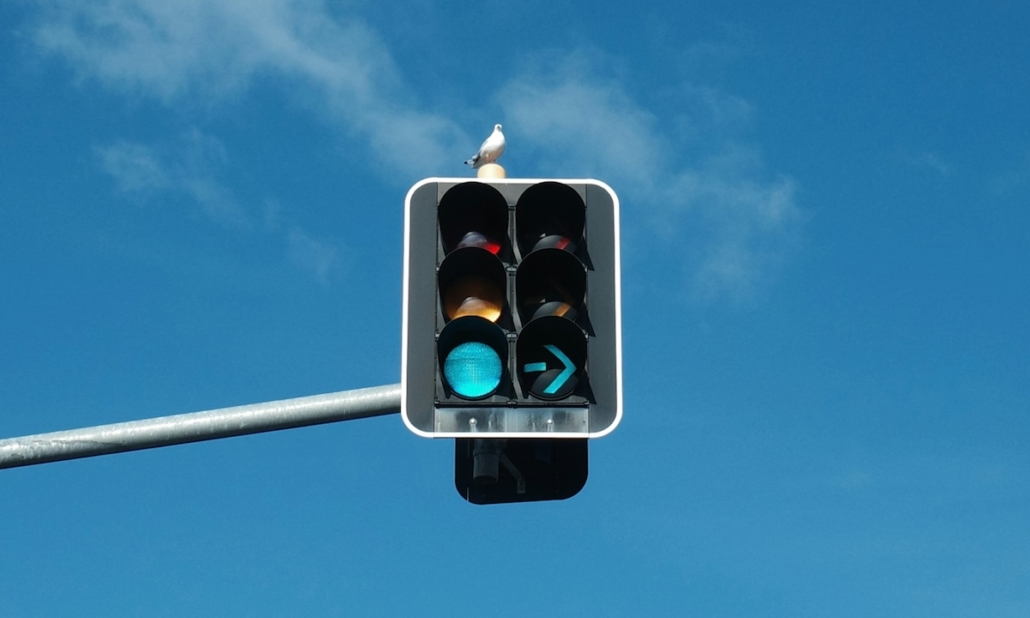
Not every question will have a crystal-clear answer at the start. That’s normal. But if you get a strong, definitive “No” to any of them, that’s a signal to stop and seriously reconsider. If the lights are mostly green—even with different levels of brightness—then it may be time to move forward, trusting God to guide your steps and work through the business for His glory.
Hannah Lau
I would ask myself:
- What does my (prospective) customer need?
- What can they accept/tolerate/be willing to change?
- How can I best address that need in a way that is profitable for me?
- How do I make it as easy as possible for them to adopt/buy/join?
These four questions are basically four slices of a pie, and you’re trying to figure out the sweet spot, balancing the size of each slice so that all the questions can be answered to a reasonably satisfactory level. If you can’t make it work, then you probably don’t have a workable business model.
How do you know if a business model is working/not working? What are some signs and symptoms?
Hannah Lau
When a business is working, customers or clients will adopt your product or service with little resistance, recognise value, and have no problem paying for it. Conversely, when a business is not working, cashflow is tight on a regular basis and selling is hard and takes convincing your customers. It’s not working when you put too much effort in that only results in minimal customer satisfaction or profitability. In other words, if the business struggles and requires a ton of effort in just to keep five customers happy or just break even, the model isn’t working.
Mike Baer
Every time I’ve launched a new business, I’ve asked two related questions: How will I know if this is working? and How long should I give it? If you can ask—and answer—those honestly and courageously, you’ll save yourself a lot of wasted time, money, and emotional energy.
The simple answer is this: a business model is working if people are buying your product or service at a margin that can produce profit over time. More specifically, are people continuing to buy it, and is that customer base growing? Repeat customers—and more of them—are the foundation of any real business. One-time sales can flatter you; repeat sales tell you the truth.
Closely tied to this is cash flow. Whether your original projections are perfectly accurate is secondary. What matters is whether money is flowing into the business in a measurable and increasing way. If customers are the foundation, cash flow is the lifeblood. A business can survive bad forecasts, but it cannot survive chronic cash starvation.
Then there is your energy. Startups are hard—that’s a given. But chaos is exhausting in a different way. Separate normal moments (or even days) of discouragement from the deeper question: Do I still experience some measure of excitement, curiosity, or hope as I pursue growth and progress? If everything feels like grinding uphill with no traction, pay attention.
Finally—and this matters deeply in BAM—can you remain faithful to your Gospel commitments? Are honesty, compassion, fair dealing, and relationship-building sustainable in this model? If survival consistently requires cutting ethical corners or hollowing out your witness, something is wrong. The Good News should be revealed naturally over time, not sacrificed for short-term survival.
Grant Smith
How do you know if your business model is working? Well, you have to clearly define what you want to achieve, too many business’s when they start out are over ambitious. I had a friend who took on a coffee franchise, wanted to employ ex offenders, and generate money for his ministry. Running business is hard work, and you may need to focus on one priority at a time. If your focus is employing ex offenders, let that be your measurable, making a profit and a social impact. If you crack that, then you can move to providing finance for ministry.
A recommendation would be, if you are starting a business, appoint a voluntary board of strong people who will challenge you. Each person you appoint to your board needs to bring a skill, whether in finance, or your field of operation or HR or legal or… But the most important quality in a board member is that they share your vision of what you want to achieve. Then make yourself accountable to them. If your ambition is to pay people fairer than the market determines, make that your clear measurable focus. The danger is that you start making money, which you need to do to continue, but you enjoy the profits so much that you may lose the fair employment focus. Your board should keep you to account.
Coming up in Part 2, our three BAM mentors answer our third question:
What would be some good research approaches to figuring out good models?
 Mike Baer was one of the early leaders in the modern Business as Mission movement. He started his career as a pastor and church planter. After 15 years in the pastorate Mike was led into business where he gradually began to discover the potential for believers in business to bless their communities, evangelize the lost and spread the Kingdom of God, especially among the unreached. Today, Mike is the CEO of Third Path Initiative, an online BAM education resource, a strategic coach to companies in the staffing industry, a podcast host and YouTube content creator, a speaker at BAM conferences, and an author of 10 books. He and his wife Cindy live in the mountains of Western North Carolina (USA) and enjoy their 7 grandchildren.
 Hannah Lau began her career in advertising when she moved to Asia as a marketplace missionary. In 2015, she began her journey as a redemptive entrepreneur, building and helping others build businesses that embody the gospel in every area of its operations. She is the co-creator of the Redemptive Business Canvas and the founder of Arukah Works, helping others live out their faith through entrepreneurship.

Grant Smith is a quantity surveyor who has worked with international construction companies and managed his own consultancy practice in the UK for over thirty years. In the year 2000, Grant recognised that construction work in Kenya had a response to poverty, commercially creating fairer pay and apprenticeship opportunities. He committed himself to finding sustainable solutions to transform individuals and societies. Grant is now the CEO of Hand in Hand Group and a director of a Kenyan construction company. Grant is the chair of Hand in Hand Foundation. Grant has had the privilege of being married to Sue since 1985 and has three children he is very proud of. He is a workplace speaker with LICC and the author of The Accidental Social Entrepreneur.


