
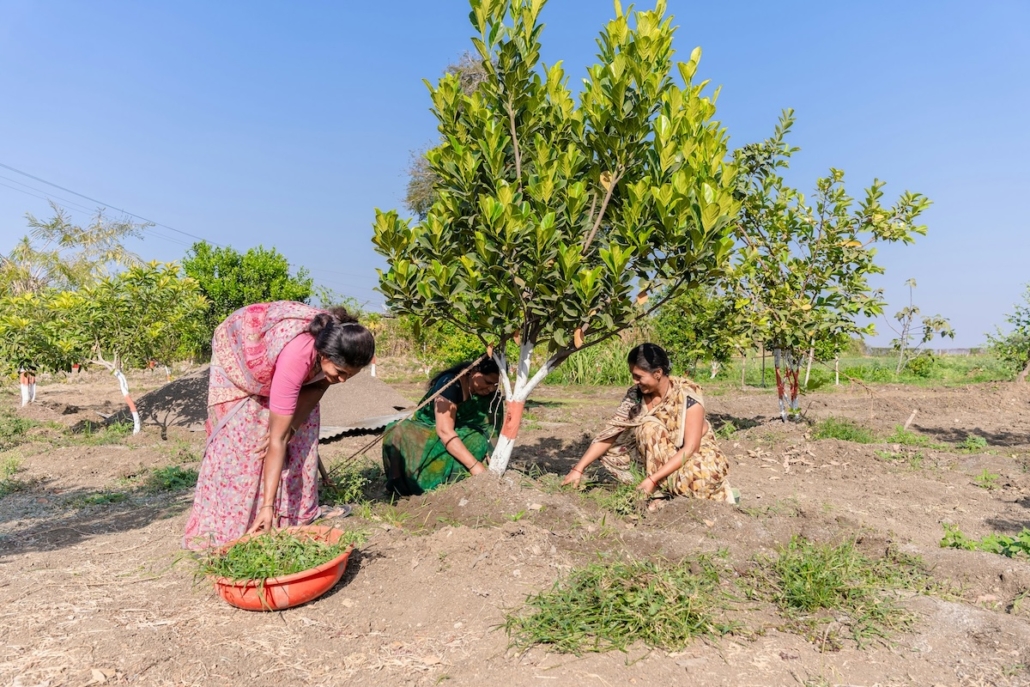
The Most Strategically Important BAM Opportunity of Our Generation? Agribusiness!
by Mark Ingram
According to Joshua Project, the overwhelming majority of the world’s remaining unreached people groups are located in rural, economically vulnerable, and often geographically isolated regions across Asia, Africa, and parts of the Middle East. This reality carries profound implications for the future of global missions.
Agriculture is not merely an economic activity in these contexts—it is the foundational structure of life itself. It shapes family systems, community relationships, land use, nutrition, income stability, migration patterns, education access, and social resilience. In many unreached regions, farming is the dominant livelihood of the majority population. As a result, any missions paradigm seeking long-term presence, credibility, sustainability, and transformational impact in these regions must engage meaningfully with rural economic realities.
Business as Mission (BAM) agribusiness therefore represents far more than a funding mechanism or entrepreneurial trend. It may constitute one of the most strategically important missiological developments of the 21st century.
Unlike externally dependent models that can struggle with sustainability, restricted access environments, donor fatigue, or perceptions of foreign dependency, BAM agribusiness has the potential to embed Gospel witness within the ordinary economic fabric of rural life. It enables long-term relational presence among communities while simultaneously addressing tangible challenges such as poverty, food insecurity, unstable markets, low productivity, unemployment, and exploitative value chains.
This is especially significant because many frontier missions contexts are not primarily urban knowledge economies. They are agrarian societies. In such contexts, agribusiness may provide:
•? ?legitimate social and economic participation,
•? ?durable local credibility,
•? ?pathways for local leadership development,
•? ?opportunities for discipleship within everyday life,
•? ?and sustainable mechanisms for community flourishing.
Importantly, BAM agribusiness also aligns with the reality that local believers and entrepreneurs are often better positioned than foreign missionaries to build enduring influence in restricted or sensitive environments. Enterprise-based models can create decentralized, locally owned, economically viable ecosystems that are significantly more resilient than heavily centralized institutional models.
The strategic implications are enormous.
If even a modest percentage of global Christian missions capital were progressively redirected toward well-designed BAM agribusiness ecosystems—particularly those focused on smallholder farming communities, rural processing, irrigation, market systems, and local enterprise development—the Church could potentially mobilize billions of dollars toward sustainable, embedded, and multiplying frontier engagement over coming decades.
In this sense, BAM agribusiness should not be viewed merely as “missions plus business.” Rather, for large portions of the unreached rural world, it may become one of the most practical and scalable frameworks through which long-term Gospel presence, community transformation, economic dignity, and indigenous church formation can occur together.
Join the Movement
This is not just a conversation for those in agriculture, although we’d love to hear from you! If you’re a pastor who wants to support rural evangelism, an investor seeking redemptive impact, a technologist, agronomist, business coach, or prayer partner—you’re needed.
Help us build a global, diverse, and Spirit-led response to the call of the Great Commission through agribusiness.
? Find out more about the Consultation on BAM and Agribusiness here
? Connect with the new Global Sowers initiative here
? Contact the BAM Agribusiness team at ag@bamglobal.org
 Mark Ingram is the Co-founder of the BAM agribusiness network Global Sowers and Founder and CEO of LINC Strategies. LINC Strategies is a collective of poverty alleviation specialists dedicated to crafting innovative and sustainable business solutions. Mark has over 25 years’ experience in the development of high impact inclusive business ventures. His experience includes founding the award-winning non-profit Business for Development, where he built inclusive agribusiness projects across Africa, Asia and the Pacific; Chief Impact Officer of Brightlight Group, developing impact strategy for social impact investment funds across Australia, New Zealand and the Pacific; Trade Commissioner & Consul General for the New Zealand Government, establishing the Melbourne Consulate, catalyzing trans-Tasman agrotechnology and biotechnology alliances and trade. With this knowledge and experience, he has consulted to over 100 clients including ASX-200 listed companies, the Asian Development Bank, the United Nations Development Program, the World Economic Forum, Australian and New Zealand Governments, international non-government organizations, and large Foundations across the world.
Photo by EqualStock on Unsplash


